Selling a Distressed Multifamily Building in St. Louis Without Making Repairs First
Deferred maintenance doesn't have to become a repair bill before you can sell. Here's what it actually takes to sell as-is.
August 24, 2026 · 4 min read
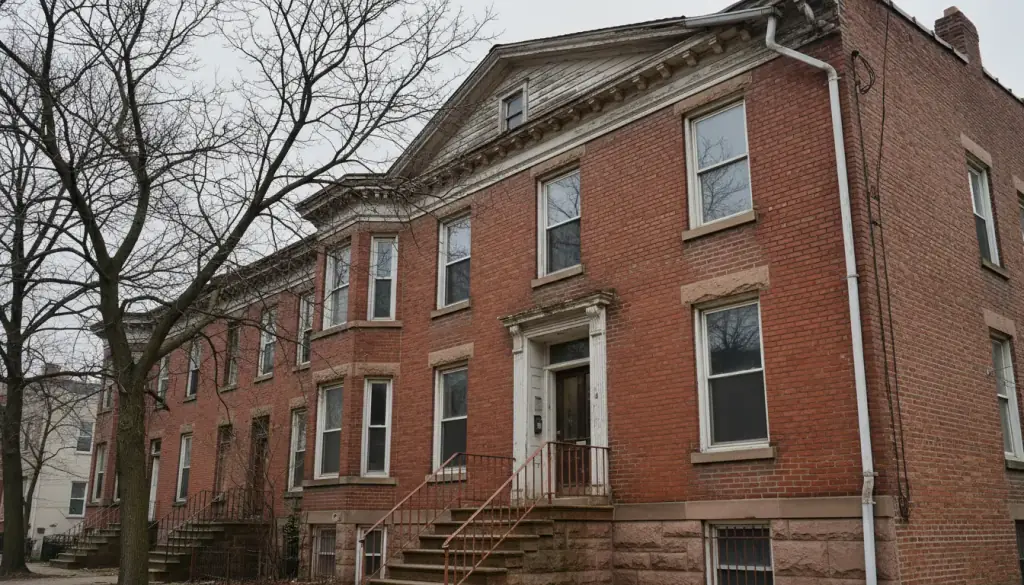
Every small multifamily building in St. Louis eventually needs something. A roof that's fifteen years past its warranty. A boiler that limps through one more winter. Knob-and-tube wiring behind a wall nobody's opened since the Carter administration. On its own, none of that is a crisis. It's just what happens to brick walk-ups over time. The problem shows up the moment you try to sell.
Most buyers on the open market need a mortgage, and most mortgages come with an inspection and an appraisal that a traditional lender uses to decide whether the building is worth financing. Roofs, HVAC systems, plumbing and electrical are exactly the four things underwriters flag first. If any one of them is past due, the buyer's lender either declines the loan or demands the repair be done before closing, on your dime, before you've seen a dollar. That's the trap owners find themselves in: you can't sell without fixing it, and you don't want to spend money fixing something you're about to give up anyway.
Why deferred maintenance kills a conventional sale
It isn't the tenants who reject a distressed building, and it usually isn't even the buyer. It's the buyer's lender. A conventional loan on income property has to satisfy the same underwriting standards whether the building has two units or twenty, and deferred maintenance on the roof, mechanicals, plumbing or wiring is precisely what triggers a lender to pull back or require a holdback. That single fact explains why a perfectly sellable building, at the right price, sits on the market for months when it's marketed conventionally. It isn't the market rejecting the property. It's the financing.
Meanwhile the building keeps costing you money. Insurance premiums climb every year a roof gets older. St. Louis and St. Louis County code enforcement doesn't slow down because a property is hard to finance, and an open violation can attach to the title and follow the sale. None of this improves by waiting.
What selling as-is for cash actually changes
A cash buyer isn't relying on a bank's inspection checklist, because there's no bank in the transaction. That's the entire mechanism, not a sales pitch. When a buyer pays with their own capital, the deal isn't contingent on a lender's appraisal clearing the roof, the furnace or the wiring. The building gets bought in the condition it's in, on a timeline the buyer controls, not one dictated by an underwriter's repair list.
That means the roof stays as it is. The boiler stays as it is. You don't get a punch list back after a home inspector walks the building, and you don't spend money bringing something up to code for a buyer who was never going to own it once the money changed hands. The building sells for what it is: a property with a challenge that keeps it from selling easily on the open market, priced accordingly, closed quickly.
What a fair as-is offer looks like
- The offer accounts for what needs fixing, not for a fictional turnkey condition the building isn't in
- There's no repair contingency added after the fact, and no renegotiation once an inspector shows up
- Closing happens on your timeline, not on a mortgage underwriter's processing queue
- No showings, no staging, no waiting on a buyer's financing to fall through at the last minute
None of that means the building is worth nothing, or that a distressed sale is automatically a lowball. It means the price reflects reality: what the roof and the mechanicals will cost the next owner, and what it's worth to skip the repair-and-relist cycle entirely.
Class C stock and why this is common in St. Louis specifically
St. Louis carries a lot of older Class C multifamily stock, brick two-flats and small apartment buildings built well before modern code, and that older housing changes hands more often than newer construction because it ages out of financeable condition faster. It's not a knock on the city's building stock, it's just the math of a market with a lot of pre-war brick. Combine that with fewer new units coming online (completions are down substantially this year against recent norms) and older buildings carry more of the transaction volume than they would in a newer market.
None of that requires you to become an expert in cap rates or construction pipelines. It just explains why deferred maintenance in an older St. Louis building is such a common reason for a sale to stall, and why a cash sale exists as a real, ordinary path out, not a last resort for buildings nobody else wants.
The honest version of when this makes sense
If you have the cash to bring the roof, the mechanicals and the wiring up to a standard a lender will finance, and you can carry the building through a normal marketing period, the open market will very likely net you more once repairs are made. A cash, as-is sale trades some of that top-line number for speed, certainty and zero repair spend upfront. If deferred maintenance is exactly what's keeping the building from selling and you don't want to fund the fix, that trade is the whole point.
'Distressed' scares a lot of owners, and it shouldn't. It just means the property has a challenge, in this case deferred maintenance, that keeps it from selling easily the normal way. It doesn't mean the building is worthless, and it doesn't mean you're out of options. It means there's a faster, more direct path to selling it than the one most owners assume is the only one.
Chaja Properties, Inc. — (818) 518-0740
Call (818) 518-0740More articles
Absentee and Out-of-State Owners: Selling a St. Louis Rental You Can't Get To
Managing a rental from another state is hard enough. Selling one shouldn't require you to fly in and out every other week.
Inherited a Multifamily Building in St. Louis? What the Heirs Actually Have to Decide
Inheriting a rental building together is rarely simple. Here's how heirs usually work through the decision.